
How It Works
How we value your artwork from a photo
Upload clear photos and get a research-backed value range—fast, free, and without shipping your art or paying for a formal appraisal upfront. We complete hundreds of valuations every month for everyday art owners.
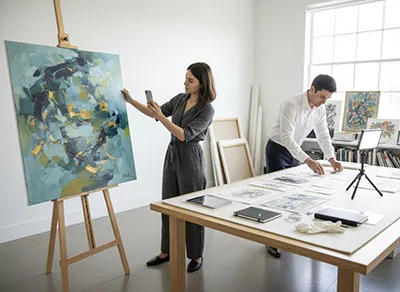
The four-step artwork valuation process
Whether you have an old painting, inherited artwork, or a piece you're considering selling, the process is the same. Here's what happens after you upload.
Upload your artwork photos
Clear images let us identify artist, originality, medium, condition, labels, age cues, frame quality, and paper or canvas characteristics.
Photos to include
- Full front and full back
- Close-ups of signature/monogram and labels
- Texture/detail shots for originals vs prints
- Any damage or condition areas
We analyze your artwork
We combine image analysis, market data, and expert review to evaluate your piece. The analysis covers:
- Artist identification — signature matching, stylistic cues, and era indicators
- Original vs print — determining if it's an original, limited edition, or reproduction
- Medium and technique — brushwork, texture, and surface characteristics
- Condition — noting any damage, restoration, or wear that affects value
- Provenance clues — gallery labels, stamps, and ownership history
- Comparable sales — recent auction results and market pricing
You receive your value range
A realistic, research-backed estimate of current market value, including artist likelihood, originality, medium notes, condition observations, rarity/demand signals, and next-step recommendations.
We provide a range (not a single number) because condition, buyer preference, demand shifts, and edition/originality all affect final price.
Next steps based on your results
Your valuation includes recommendations tailored to your piece:
- If it's valuable — we'll suggest whether a formal appraisal makes sense, and outline selling options (auction, gallery, private sale) if you're interested
- If authentication is needed — we'll explain what's required and whether it's worth the investment
- If it needs restoration — we'll note condition issues and whether conservation would increase value
- If it's sentimental but not high-value — we'll provide storage and preservation guidance
What types of artwork can we value?
We value most two-dimensional artwork and select three-dimensional pieces:
- Paintings — oil, acrylic, watercolor, gouache, mixed media
- Drawings — charcoal, graphite, pastel, pen and ink
- Prints — etchings, lithographs, serigraphs, giclées, limited editions (see our guide on original vs print artwork)
- Folk and vintage art — Americana, estate pieces, mid-century works
- Sculptures and objects — with sufficient photographic detail
If you're unsure whether your piece qualifies, upload it anyway — we'll let you know if we need more information or if a different type of evaluation is recommended.
FAQ: Art valuation process questions
Common questions from people considering an online artwork valuation.
With clear photos, online valuations are highly accurate for establishing market value ranges. We analyze the same factors a traditional appraiser would — artist, medium, condition, provenance, and recent comparable sales. For high-value pieces where authentication or insurance documentation is needed, we'll recommend a formal appraisal as a next step.
It's a free value estimate based on photos and market data — not a certified appraisal document. Formal appraisals (which cost $200–$500+) are only required for insurance claims, estate settlements, tax deductions, or legal proceedings. For deciding whether to sell, understanding what you have, or setting a price range, our valuation provides the information you need.
Yes — that's one of the most common uses. The value range gives you a realistic starting point for pricing across any channel, whether you're listing online, approaching a gallery, or considering auction. See our guide to selling artwork for help choosing the right path.
Yes — the back often contains crucial information. Gallery labels, auction stickers, artist stamps, stretcher bar markings, and material details all help with identification and provenance. A clear photo of the back can be the difference between a confident attribution and an uncertain one.
Most valuations are completed within 24–48 hours. Complex pieces — those requiring deeper research, expert consultation, or additional photo requests — may take slightly longer. You'll receive an email when your valuation is ready.
Yes — you can submit as many pieces as you need valued. This is especially useful if you've inherited a collection or are evaluating multiple pieces before deciding what to sell or keep.
Unsigned works can still have value. We analyze style, technique, period, subject matter, and any other identifying marks to narrow down attribution. Some artists rarely signed their work, and regional or folk art is often unsigned but collectible. We'll provide a value range based on what the evidence supports.
Not always — age alone doesn't guarantee value. What matters is the artist's market, the piece's condition, and current collector demand. Many old paintings are decorative rather than investment-grade. A valuation tells you where your piece falls and whether it's worth pursuing further.
Recent Submissions
A small sample from the hundreds of pieces submitted each month. We display only the artist's signature to protect the privacy of those who submitted.
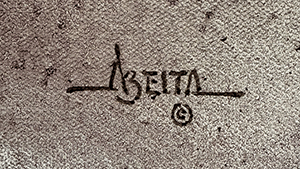
Jim Abeita
Navajo Matriarch
Abeita was one of the first Navajo artists to break from traditional flat-style painting into Contemporary Realism. Johnny Cash was so impressed by his work that he commissioned family portraits and the cover art for the 1971 Johnny Cash Collection: His Greatest Hits, Volume II album.
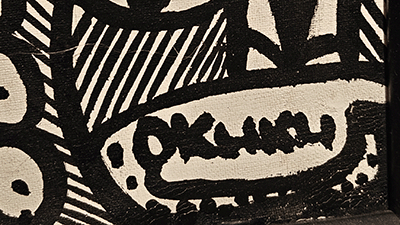
Francis Okhui
Faces
Okhui is a Nigerian artist whose dense, intricate style draws from Yoruba mythology and traditional textile patterns. Every single inch of his canvases is filled with pattern and energy — a "horror vacui" approach that gives his work an unmistakable visual intensity.
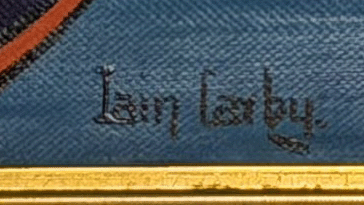
Iain W. Carby
Inner Harbour, Pittenweem (2007)
Carby spent most of his life on a North Sea oil rig before graduating art school at nearly 60. Influenced by Joan Miró, he replaced Scotland's grey skies with what he called "pure liquid sunshine" — and collectors have noticed.
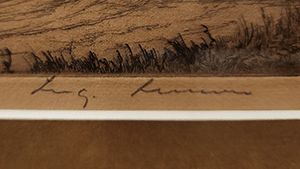
Luigi Lucioni
Route 7 (1946)
At just 32, Lucioni became the youngest artist to have a work purchased by the Metropolitan Museum of Art. Often called the "Painter Laureate of Vermont," his etchings show a level of detail that was almost unheard of at the time and remain actively traded at auction.
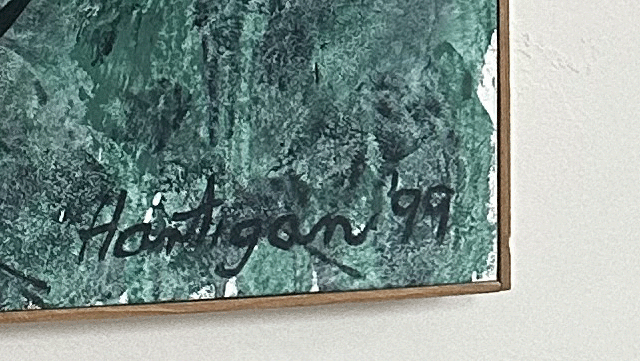
Grace Hartigan
Portrait of a Woman (1999)
Hartigan was a key figure in Abstract Expressionism and a close peer of Jackson Pollock and Willem de Kooning. In the 1950s, she exhibited under the name "George Hartigan" just to get taken seriously — and her work has only gotten more collectible since.
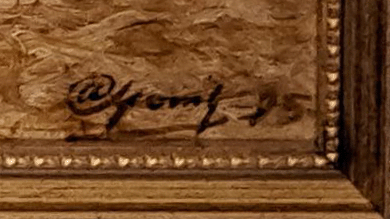
Alexander Young
Harvesting at St Monance, Fife (1895)
Young exhibited at both the Royal Scottish Academy and the Royal Academy in London. This painting captures St Monance — a tiny fishing village in Fife that became an unexpected hotspot for Scottish plein air painters in the 1890s.
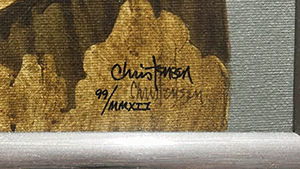
James C. Christensen
Two Sisters (Diptych)
Christensen was known as the "Professor of the Imagination," and every detail in his work is intentional — right down to the unripe strawberry plant and white violet each sister holds. His richly symbolic paintings have a dedicated collector following.
Attilio Pratella
Scena di Marina a Capri
Pratella painted Capri by literally dabbing spots of paint onto canvas — a technique called "macchia" — to capture how Mediterranean sunlight hits old plaster and water. His marina scenes are auction house regulars across Europe.
Ready to discover what your artwork is worth?
Upload your photos and get a personalized valuation—fast, free, and confidential.
Get Free Valuation