
Old Painting Value
How to tell if an old painting is worth anything
Age alone doesn’t determine value. Learn the signals that make older paintings valuable—and upload your photos anytime for a free valuation.
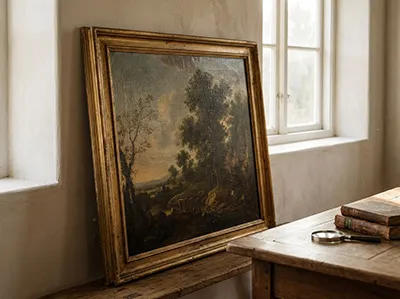
What determines the value of an old painting?
Age alone rarely drives value. These are the factors that separate a decorative antique from a painting with real market worth.
Artist identity
The single biggest factor in what an old painting is worth. Signatures, monograms, stylistic clues, and catalog references help identify the creator — even when unsigned. Works by listed artists like Rembrandt, Winslow Homer, or Renoir command significant premiums, but lesser-known regional painters can also carry real value when they have an established auction history.
Original vs reproduction
Many antique paintings hanging in homes are actually reproductions printed on canvas. Originals show varied brushwork, texture, and depth under raking light; reproductions reveal dot patterns, uniform surfaces, and mechanical marks. This distinction alone can mean the difference between a $50 decorative piece and a $5,000+ original. See our original vs print artwork guide for details.
Medium & technique
Oil on canvas or panel is the most common medium for older paintings and tends to hold value well. Tempera, watercolor, gouache, and ink works also appear frequently in vintage collections. Skilled composition, visible layering, and technical quality all add to a painting's market appeal — crude or amateur execution reduces it regardless of age.
Condition & age wear
Some age-related wear is expected and even desirable — authentic craquelure signals a genuine old painting. But darkened varnish, tears, missing paint, mold, water damage, and amateur restoration all reduce value. A vintage painting in strong original condition can be worth several times more than the same work with significant damage.
Provenance & history
Gallery tags, auction labels, exhibition stickers, certificates of authenticity, and ownership records build trust and legitimacy. If you've inherited artwork, check the back of the frame and canvas for any documentation — even partial provenance can meaningfully increase value and help establish attribution.
Subject & era
Market demand varies by subject and period. 19th-century American landscapes, European Impressionist works, maritime scenes, and early modern paintings remain highly collected. Portraits tend to be less valuable unless the artist or subject is notable. Regional styles — Hudson River School, California plein air, British sporting art — have dedicated collector bases.
Comparable sales & demand
Recent auction results and gallery pricing show what similar works actually sell for — not what sellers hope to get. A painting's worth depends on current market conditions and collector demand for that specific artist, style, and subject. Our artwork valuation compares your piece against relevant sales data.
Signs an old painting might be valuable
Not every antique painting is a hidden masterpiece, but certain clues suggest a piece may have real market value. Look for these indicators before deciding whether to pursue a formal valuation.
- Recognizable artist name
- Hand-painted brushwork and quality materials
- Good condition relative to age
- Authentic craquelure (not artificial)
- Original or old frame
- Gallery or exhibition labels
- Early or rare works by known artists
- Portraits of specific historical figures
- Strong, unique composition
⚠ Common misconceptions about old paintings
Old and vintage paintings attract more myths than most categories of art. These assumptions can lead to missed value — or wasted money on worthless pieces.
- "If it's old, it must be valuable." Age doesn't equal value.
- "A darkened painting is a sign of authenticity." Varnish can hide damage.
- "Craquelure always indicates an original." It can be artificially created.
- "Expensive frame = expensive painting." Frames were often pricier than the art.
- "Unsigned old paintings have no value." Many valuable works are unsigned.
How to evaluate an old painting (step-by-step)
You don't need to be an art historian to start assessing an old or antique painting. Follow these steps to gather the information that matters most for an accurate valuation.
Inspect the signature
Look for full names, initials, monograms, dates, or titles. Some valuable works are unsigned, so absence isn't a dealbreaker.
Examine the front under light
Tilt to see brushwork, cracking patterns, restoration, and texture. Reproductions lack depth or show repeating printed patterns.
Look at the back
Check for gallery labels, auction stickers, artist notes, framing materials, canvas type, and age of stretcher bars. The back often tells the story.
Determine the medium
Identify oil vs acrylic, panel vs canvas, hand-painted vs printed—this helps date and assess technique.
Photograph key features
Capture full front, back, signature, labels, texture close-ups, and unusual marks. Clear photos lead to better estimates.
Research similar works
If you spot a signature or style, compare with auction records—but avoid over-indexing on generic styles. Or upload for a professional estimate.
FAQ: old painting value questions answered
Common questions about determining the worth of old, antique, and vintage paintings.
Start by examining the signature, condition, subject matter, and whether the work is an original or reproduction. Gallery labels, auction stickers, and provenance records on the back can reveal important history. For a thorough assessment, upload photos to our free artwork valuation service.
No. Many older works have decorative value only — age alone doesn't drive market demand. A 200-year-old unsigned landscape may be worth less than a 50-year-old signed work by a listed artist. What matters most is who painted it, the condition, and current collector interest.
Examine the surface under raking light — originals show varied brushwork and texture, while reproductions reveal uniform dot patterns or flat surfaces. Check the edges and back for canvas vs. paper mounting, and look for edition numbers or publisher marks. See our original vs print artwork guide for a detailed walkthrough.
No — amateur cleaning or restoration almost always reduces value. Common household cleaners, water, and even bread (a persistent myth) can cause irreversible damage to paint layers and varnish. Always consult a professional conservator before touching the surface of an old painting.
Sometimes. Family paintings can range from purely sentimental to genuinely valuable, depending on the artist, condition, and subject matter. If you've inherited artwork with no documentation, a photo-based valuation can help determine whether it's worth pursuing further.
Old master works, 19th-century American landscapes, European Impressionist paintings, and early modern works tend to command the highest prices. Regional painters with strong local followings — such as Hudson River School artists or California plein air painters — can also carry significant value at auction.
Yes. Upload clear photos of the front, back, signature, and any labels to receive a free appraisal-style estimate. Most valuations are delivered within 24–48 hours. For potentially high-value antique works, we'll recommend whether a formal in-person appraisal is worthwhile.
Ready to learn your old painting's value?
Upload photos now and receive a free research-backed estimate.
Get Free Valuation