
Value My Artwork
How much is my artwork worth?
Upload photos of your painting or artwork and receive a free, research-backed value estimate. We evaluate artist identity, comparable sales, medium, condition, and overall market demand to determine what your art is worth.
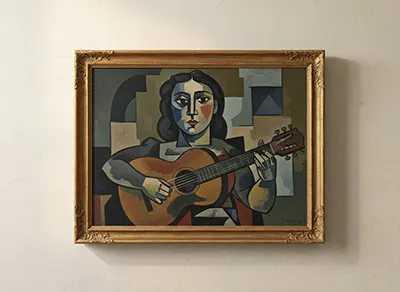
What determines artwork value?
Artwork pricing follows clear factors that separate decorative pieces from those with real market significance. Here's what we evaluate in every valuation.
Artist identity
The creator is the single biggest driver of what a painting is worth. Signatures, style, and subject matter are cross-checked against artist databases and auction records. Works by artists like Picasso, Warhol, and Monet command premiums, but lesser-known listed artists can also carry significant value.
Original vs print
Original works carry the highest value; prints and reproductions are common but can be valuable when limited or by notable artists. Learn more in our original vs print artwork guide.
Medium & technique
Oil paintings typically sell for more than acrylics or watercolors by the same artist. Printmaking value depends on edition size, technique (lithograph, screenprint, etching), and print condition. Mixed media and sculpture follow their own markets.
Condition & restoration
Cracking, fading, water damage, foxing, poor repairs, and frame issues can significantly reduce value. A painting in excellent original condition may be worth 2–5x the same work with visible damage. Professional conservation can help — amateur restoration often hurts.
Age, subject & style
Age alone doesn't equal value — market demand matters more. Mid-century modern, American Impressionism, and contemporary works remain highly collected. Learn more in our old painting value guide.
Provenance & documentation
Gallery labels, certificates of authenticity, exhibition stickers, ownership history, and auction records all boost confidence and price. If you've inherited artwork, even partial documentation can make a meaningful difference in valuation.
Comparable sales & demand
We compare your piece to recent auction results, gallery pricing, and collector demand for similar works. A painting's worth depends on what buyers are currently paying for comparable pieces — not what someone paid decades ago.
Signs your artwork might be valuable
Not every piece on your wall is worth thousands, but certain clues suggest a painting or artwork may have real market value. Look for these indicators before seeking an appraisal.
- Recognizable or signed artist
- Low edition numbers (for prints)
- Thick, textured brushstrokes
- Gallery, exhibition, or museum labels
- High-quality frame and materials
- Larger sizes with strong subjects
- Documented provenance or catalog entries
- Unusual or rare subject matter
⚠ Common mistakes that lead to bad valuations
Whether you're researching a painting's worth on your own or preparing for a professional art appraisal, these errors can lead to inaccurate results or lost value.
- Assuming age equals value.
- Confusing prints with originals.
- Ignoring damage or condition issues.
- Relying on unverified online opinions.
- Attempting DIY cleaning or restoration.
- Taking blurry or incomplete photos.
How to value your artwork online (step-by-step)
You don't need an in-person appraiser to get a reliable estimate. Follow these steps to value your painting or artwork online and understand what it might be worth.
Step 1: Take clear photos
Capture front, back, signature close-ups, labels or numbers, texture details, and the frame (optional). Clarity matters most.
Step 2: Identify key clues
Look for signatures, edition numbers, gallery labels, dates or titles, markings, and true brush texture vs. printed texture.
Step 3: Compare similar works
Subject, medium, size, artist, era, and demand are evaluated against comparable pieces.
Step 4: Understand the price range
Value is a range based on condition, rarity, trends, and confidence in authenticity—not a single inflated number.
Step 5: Know when to authenticate
Higher-value works (typically $5,000+) may need expert authentication, a condition report, or a formal insurance appraisal. We'll flag if that seems likely. Not sure whether you need a free estimate or a paid appraisal? See our free art appraisal guide.
FAQ: artwork valuation questions answered
Common questions about getting your painting or artwork valued online.
Yes. Initial valuations are completely free — no credit card or commitment required. If your artwork appears valuable, we may suggest optional next steps like authentication, a formal appraisal, or selling support, but those are always your choice.
An online valuation provides a strong starting point based on artist identity, condition, comparable sales, and current market trends. It gives you a realistic price range rather than a single inflated number. For high-value pieces, we may recommend in-person expert authentication for greater precision.
Often, yes. Clear images of the signature, style, back labels, and any markings help match the work to known artists. Even unsigned pieces can sometimes be attributed through style analysis and art-historical research.
Texture, edges, numbering, and close-up analysis provide clear indicators. For more detail, see Original vs Print Artwork.
Unsigned works can still have value if the artist is identifiable through style, provenance, or period characteristics. Gallery labels, exhibition history, or family records may help establish attribution even without a visible signature.
Yes. Limited edition prints, especially by well-known artists like Warhol or Lichtenstein, can be worth thousands. Edition size, condition, and whether the print is signed and numbered all affect value. See our original vs print guide for details.
Not necessarily. Artist identity and market demand matter far more than age alone. A 200-year-old unsigned landscape may be worth less than a 50-year-old signed work by a listed artist. Our old painting value guide explains what actually drives pricing for older works.
Most valuations are delivered fast — typically within 24–48 hours. Complex or potentially high-value pieces may require additional research and take longer. We'll keep you updated throughout the process.
Recent Submissions
A small sample from the hundreds of pieces submitted each month. We display only the artist's signature to protect the privacy of those who submitted.
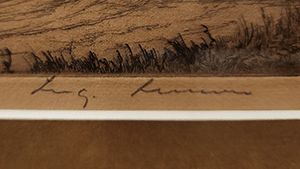
Luigi Lucioni
Route 7 (1946)
At just 32, Lucioni became the youngest artist to have a work purchased by the Metropolitan Museum of Art. Often called the "Painter Laureate of Vermont," his etchings show a level of detail that was almost unheard of at the time and remain actively traded at auction.
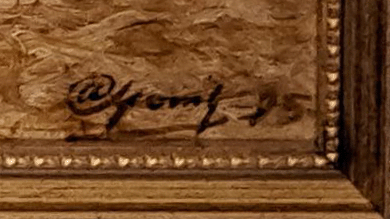
Alexander Young
Harvesting at St Monance, Fife (1895)
Young exhibited at both the Royal Scottish Academy and the Royal Academy in London. This painting captures St Monance — a tiny fishing village in Fife that became an unexpected hotspot for Scottish plein air painters in the 1890s.
Attilio Pratella
Scena di Marina a Capri
Pratella painted Capri by literally dabbing spots of paint onto canvas — a technique called "macchia" — to capture how Mediterranean sunlight hits old plaster and water. His marina scenes are auction house regulars across Europe.
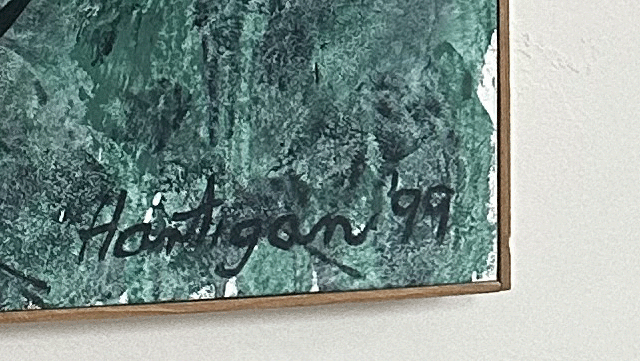
Grace Hartigan
Portrait of a Woman (1999)
Hartigan was a key figure in Abstract Expressionism and a close peer of Jackson Pollock and Willem de Kooning. In the 1950s, she exhibited under the name "George Hartigan" just to get taken seriously — and her work has only gotten more collectible since.
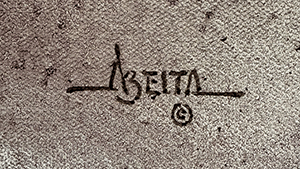
Jim Abeita
Navajo Matriarch
Abeita was one of the first Navajo artists to break from traditional flat-style painting into Contemporary Realism. Johnny Cash was so impressed by his work that he commissioned family portraits and the cover art for the 1971 Johnny Cash Collection: His Greatest Hits, Volume II album.
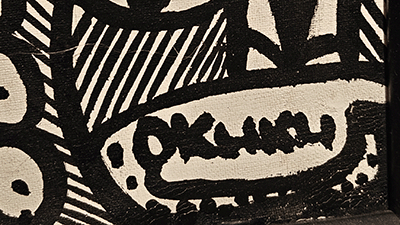
Francis Okhui
Faces
Okhui is a Nigerian artist whose dense, intricate style draws from Yoruba mythology and traditional textile patterns. Every single inch of his canvases is filled with pattern and energy — a "horror vacui" approach that gives his work an unmistakable visual intensity.
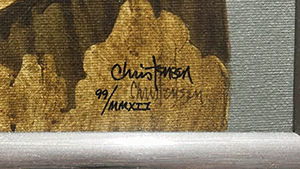
James C. Christensen
Two Sisters (Diptych)
Christensen was known as the "Professor of the Imagination," and every detail in his work is intentional — right down to the unripe strawberry plant and white violet each sister holds. His richly symbolic paintings have a dedicated collector following.
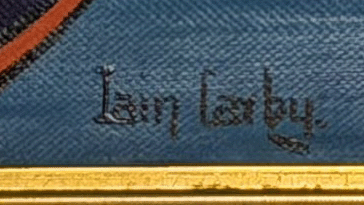
Iain W. Carby
Inner Harbour, Pittenweem (2007)
Carby spent most of his life on a North Sea oil rig before graduating art school at nearly 60. Influenced by Joan Miró, he replaced Scotland's grey skies with what he called "pure liquid sunshine" — and collectors have noticed.
Ready to discover your artwork's value?
Upload photos now and receive a free research-backed estimate.
Get Free Valuation